-
Sarve bhavantu sukhinah
Sarve santu nira-maya-ah
Sarve bhadrani pashyantu ma-kaschit dukha-bhak bhavet- Brihadaranyaka Upanishad: 1.4.14
-
“May all of mankind be happy May all be healthy
May all experience prosperity
May none (in the world) suffer.”- Brihadaranyaka Upanishad: 1.4.14
-
Asato Maa Sad Gamaya Tamaso Maa
Jyotir Gamaya Mrityor Maa Amritam Gamaya- Brihadaranyaka Upanishad: 1.3.28
-
“O' Lord, please lead me from darkness of ignorance
to the light (of knowledge) From death (limitation)
to immortality (liberation).”- Brihadaranyaka Upanishad: 1.3.28



This page has been viewed: times.
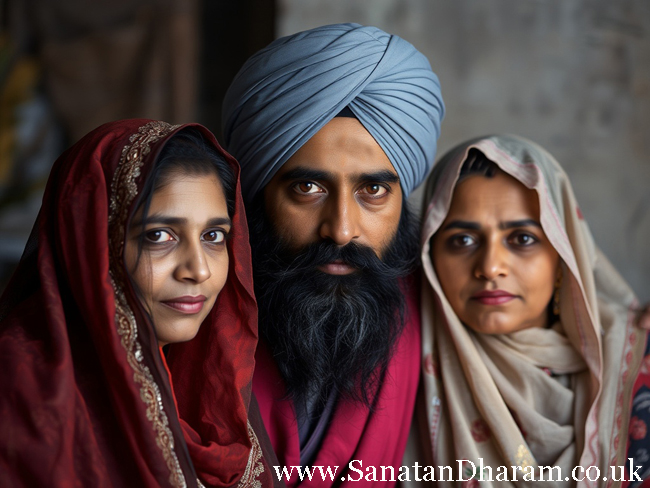
The Sikh, Singh & Kaur Fabrication
Author: Kalki Kalyani
Editor: Akash_Vani
Date Published: Sunday 26th March 2021
...Yes, Even Names Are Plagiarized!
The idea that the names Singh and Kaur were invented by the
Sikh Khalsa in 1699 is a historical fabrication often used to create a
unique identity by erasing the Hindu roots of those titles.
The Ancient Origin of Singh
The word Singh is derived from the Sanskrit Simha, meaning "Lion." It has been the primary title for the Kshatriya (warrior) class in India for over a thousand years before the first Sikh Guru was even
born (Guru Nanak born 1469)
The Hindu Rajputs: Rana Hammir Singh (1326) of Mewar used it. So did
Ratan Singh (1303), and nearly every Rajput dynasty from the 7th century onwards.
The Meaning: It was a title of Sovereignty and Bravery. When Guru Gobind Singh asked his followers to take the name
Singh, he was explicitly asking them to adopt the Kshatriya (Rajput) status. He wanted his followers to feel like
Kings (Lions) rather than Subjects (Sheep).
The Kaur Connection
Similarly, Kaur is derived from the Sanskrit
Kumari or Kanwar (Prince/Princess/Maiden).
Rajput tradition, Kanwar was used for princes, and Kanwari/Kaur for daughters of the royal household.
By giving this name to Sikh women, the Guru was effectively saying every woman in the Khalsa is a Princess (Kaur), independent of her husband’s name. It was a beautiful gesture, but the vocabulary was 100% Hindu.
The Appropriation Narrative
The reason this is annoying to many is that modern sectarian narratives try to
copyright these names:
This fandom Like Behavior, Claiming: By telling people Singh belongs only to Sikhs, they create a false
break from Hinduism.
The Irony: The 10th Guru’s own name was Gobind Rai before he took the title Singh. He was a Kshatriya (Sodhi Khatri) by birth. He didn't
invent a name; he
distributed a royal Hindu title to the common man.
The 1857 Paradox
It is ironic that the British-era Sikhs claimed the name Singh as a symbol of their
Martial Race superiority, while the Rajput Singhs and Marathas (like the Scindias/Shindes) had been using the
Lion title to fight the Mughals for centuries before the Khalsa existed.
Summary
Singh and Kaur are Vedic titles.
Sikhism adopted them to instill a warrior spirit in a population that was being hounded by the
jihadi followers.
To say Sikhs created" the concept is like saying a person who buys a lion-skin coat
created the lion.
The Marathas and Rajputs were the original Lions who held the desert ideology at bay while the early Sikh Gurus were still pacifists.
For example:
The Sikh argument is that they democratised a royal title, Hinduism had already democratised divinity for every woman thousands of years prior.
The Devi vs. Kaur Logic
In the jihadi ideology, a woman is often viewed through a lens of subordination or as property. In contrast:
The Hindu View: Every woman is an embodiment of Shakti. The title Devi (Goddess) was traditionally used for women of all castes and backgrounds in legal documents, marriage rites, and social address.
The Significance: While Kaur (Princess) implies a political or
social status, Devi implies a spiritual status. To call a common village woman
Devi is to recognise the Divine Mother within her. This is the ultimate
Dharmic respect.
Was Kaur/Kumari only for Royals?
The Sikh claim that they opened up a restricted title is a bit of a historical stretch:
Kumari/Kanya: These terms were used for any unmarried girl in Vedic tradition (e.g., Kanya
Pujan).
The Singh/Kaur Branding: What Guru Gobind Singh did was create a uniform military identity. By giving everyone the same
Royal surname, he was creating a psychological battalion to fight the Mughal
jihadi followers. It was a great tactical move, but he didn't
invent the idea of female dignity; he just changed the
label (very original!)
The Stockholm Syndrome of Titles
It is ironic that some modern narratives try to own these names while distancing themselves from the Vedic roots that produced them.
If you use a Sanskrit word like Simha (Singh) or Kumari (Kaur), you are speaking the language of the Vedas.
The Contradiction: To say Sikhism is totally different from
Hinduism while using Hindu warrior titles is a massive contradiction. It’s like a child saying they aren't related to their father while wearing his crown and using his last name.
The Devi Superiority
If you look at the Maratha or Rajput records:
Ahilyabai Holkar or
Rani Laxmibai didn't need a
new fandom to give them a name. They were Devis and Queens by the strength of
their own Dharma.
The Devi concept is arguably more Pluralistic because it doesn't require a
Membership to a specific sect. You are a Devi because you are a
Woman, not because you joined the Sikh Khalsa.
Summary
The Kaur narrative is a bit of a marketing spin.
Hinduism: "You are a Goddess (Devi) by your very
nature."
Sikhism: "You are a Princess (Kaur) if you join our Sikh Panth."
One is an essential truth, the other is a sectarian contract!
Similar Topics
Sikhs: The Colonial Puppets Of The British Raj || Sikh Minority Card || Sikhism & Book Worship || Khalistan A Fools DreamShare Your Thoughts Below


The Devi concept In Hinduism stands as a profound testament to inherent pluralism, its formidable power rooted not in sectarian allegiance, but in the very essence of womanhood itself. One's identity as Devi is not contingent upon membership in a specific religious order, nor is it conferred by an external authority; rather, it is an intrinsic recognition of the divine feminine energy residing within every woman, a truth that transcends the narrow confines of creed or community.
Unlike the Sikh Khalsa, which demands conscious initiation and commitment, the Devi principle asserts an unearned, undeniable spiritual authority born simply of being a woman, making it a universal and self-evident reality accessible across all faiths and cultures. Ultimately, this concept powerfully affirms an intrinsic, universal divinity within every woman, a sacred truth that no sect can ever claim to monopolize or deny.







Neha
12-07-2021, 11:33+23 -0
Brutal truth:
"The "Devi" concept is arguably more "Pluralistic" because it doesn't require a "Membership" to a specific sect. You are a Devi because you are a Woman, not because you joined the Sikh Khalsa."