-
Sarve bhavantu sukhinah
Sarve santu nira-maya-ah
Sarve bhadrani pashyantu ma-kaschit dukha-bhak bhavet- Brihadaranyaka Upanishad: 1.4.14
-
“May all of mankind be happy May all be healthy
May all experience prosperity
May none (in the world) suffer.”- Brihadaranyaka Upanishad: 1.4.14
-
Asato Maa Sad Gamaya Tamaso Maa
Jyotir Gamaya Mrityor Maa Amritam Gamaya- Brihadaranyaka Upanishad: 1.3.28
-
“O' Lord, please lead me from darkness of ignorance
to the light (of knowledge) From death (limitation)
to immortality (liberation).”- Brihadaranyaka Upanishad: 1.3.28



This page has been viewed: times.
Hindu Superiority
"AN TO ATTEMPT DETERMINE THE POSITION OF THE HINDU RACE IN THE
SCALE OF NATIONS"
BY BILAS §ARDA, B.A., F.R.S.L.,
Part Three
Interfaith Marriages - Greeks & Indians
Compiler: Kalki Kalyani
Editor: Akash_Vani
Date Published: Monday 22nd November 2021
The Indo-Greek kings, particularly in Bactria and regions of Punjab, integrated with local populations, adopting various Indian customs, religions, and administrative practices.
While not common to the point of merging the entire population, interfaith and interracial marriages were a part of the political landscape, particularly among the elite, facilitating cultural exchange between Greek settlers and Indian populations.
These unions, often called intermarriage agreements or Epigamia (Greek: Ἐπιγαμία), were primarily utilized to secure treaties between Indo-Greek kings and local Indian rulers, especially in the northwestern Indian subcontinent.
Notable Figures From This Article:
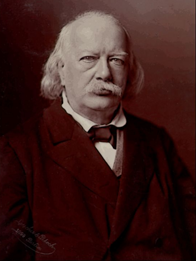
Albrecht Weber (1825 - 1901)
Prussian-German Indologist and historian who studied the history of Jainism in India.
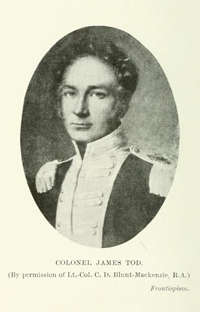
Colonel James Tod (1782–1835) was a British East India Company officer, political agent, and renowned Indologist who spent 24 years in India (1799–1823).
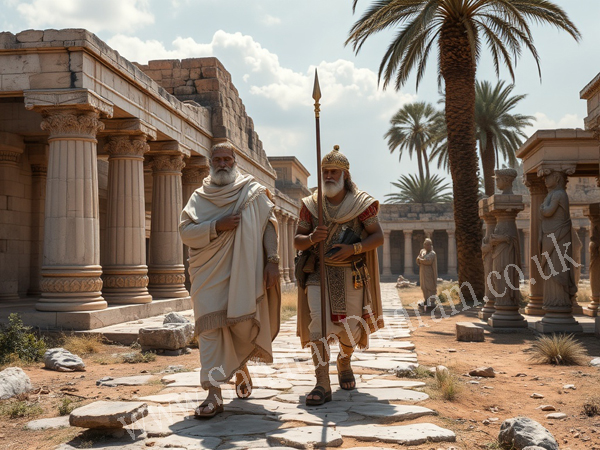
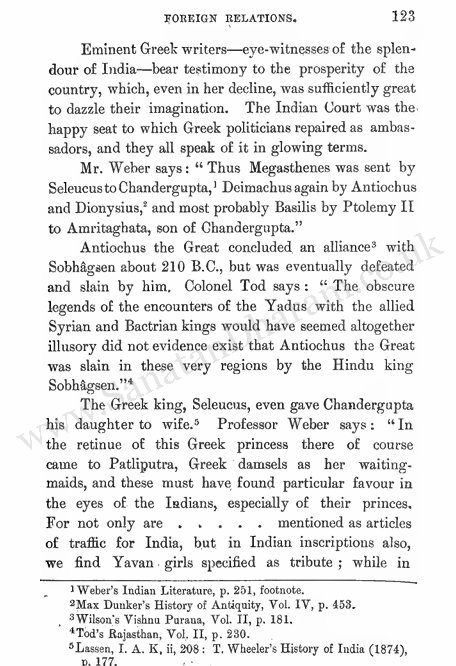
Eminent Greek writers — eye-witnesses of the splendor of India — bear testimony to the prosperity of the country,
which, even in her decline, was sufficiently great to dazzle their imagination.
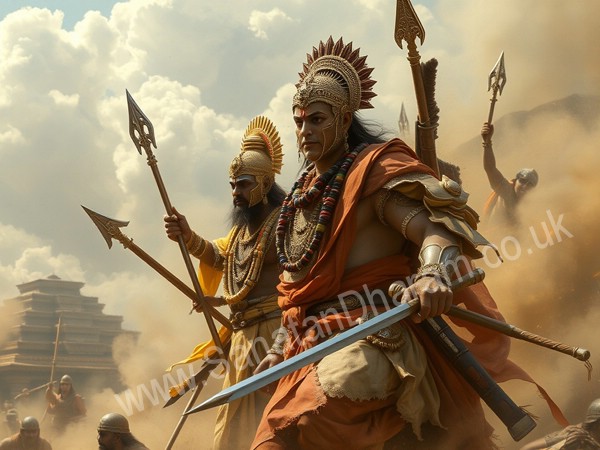
The Indian Court was the. happy seat to which Greek politicians repaired as ambassadors, and they all speak of it in glowing terms.
Mr. Weber says :
"Thus Megasthenes was sent by Seleucus to Chandergupta,' Deimachus again by Antiochus and Dionysius,
"and most probably Basilis by Ptolemy II to Amritaghata, son of Ghandergupta."
Antiochus the Great concluded, an alliance with Sobhagsen
about 210 B.C., but was eventually defeated and slain by him.
Colonel Tod says :
"The obscure legends of the encounters of the Yadus with the allied Syrian
and Bactrian kings would have seemed altogether illusory did not evidence exist that
Antiochus the Great was slain in these very regions by the Hindu king Sobhagsen.
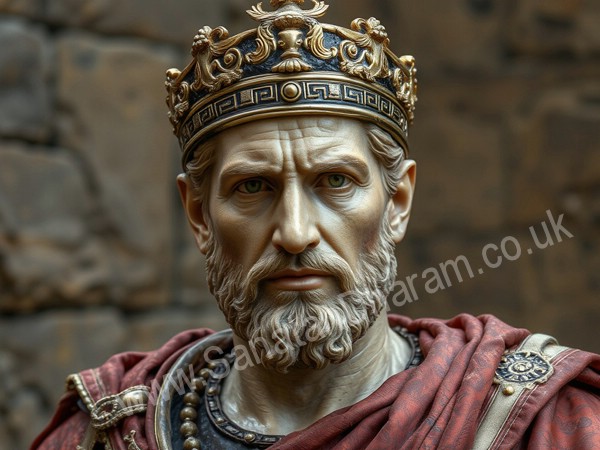
"The Greek king, Seleucus, even gave Ghandergupta his daughter to wife.

Professor Weber says : "In the retinue of this Greek princess there of course came to Patliputra,
Greek damsels as her waiting- maids, and these must have found particular favour in the eyes of the
Indians, especially of their princes.
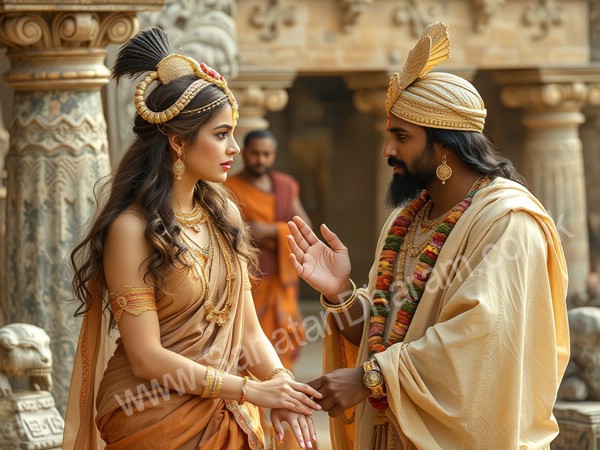
For not only are ..... of mentioned as articles traffic for India, but in Indian
inscriptions also, we find Yavan girls specified as tribute;
while in Indian literature, and especially in Kalidasa,
we are informed that Indian princes were waited upon by Yavaiiis (Greek damsels);
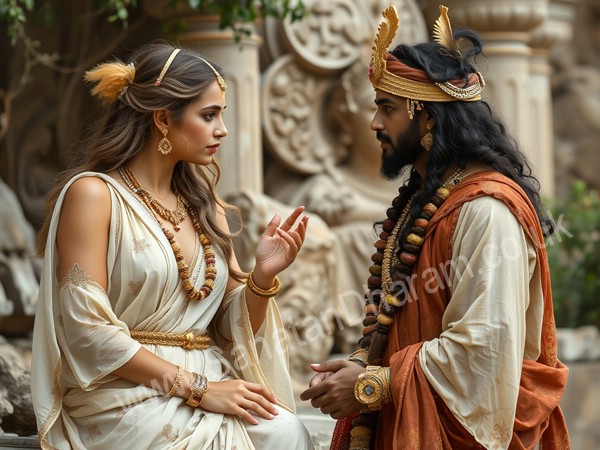
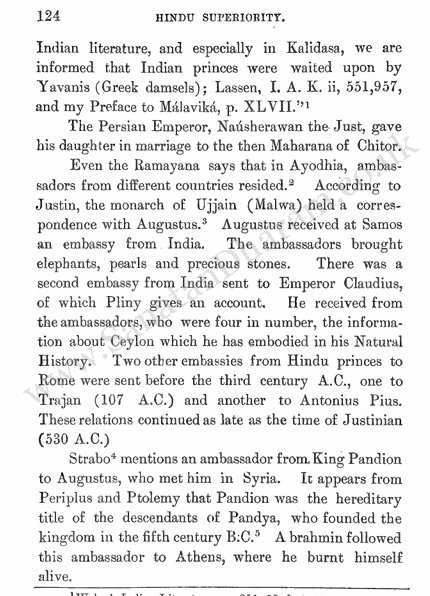
The Persian Emperor, Naiisherawan the Just, gave his daughter in marriage to the then Maharana of Chitor.
Even the Ramayana says that in Ayodhia, ambassadors from different countries resided.
According
to Justin, the monarch of Ujjain (Malwa) held a correspondence with Augustus.
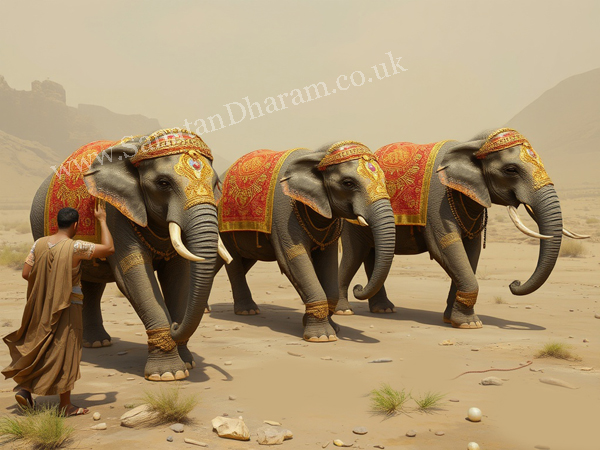
Augustus received at Samos an embassy from, India.
The ambassadors brought elephants, pearls and precious stones.
There was a second embassy from India sent to Emperor Claudius, of which Pliny gives an account.
He received from the ambassadors, who were four in number, the
information about Ceylon which he has embodied in his Natural History. Two other embassies from Hindu princes to Rome
were sent before the third century A.C., one to Trajan (107 A.C.) and another to Antonius Pius.
These relations continued as late as the time of Justinian (530 A.C.) Strabo mentions an ambassador from.
King Pandion to Augustus, who met him in Syria. It appears from Periplus and Ptolemy that Pandion was the hereditary title of the descendants
of
Pandya, who founded the kingdom in the fifth century B;C.
A brahmin followed this ambassador to Athens, where he burnt himself alive. - Weber's Indian Literature, pp. 251, 52
____________________________________________________________________________________________________________
Quotes & extracts for this article can be found here.
- Book source:
"Hindu Superiority (Classic Reprint): An Attempt to Determine the Position of the Hindu Race in the Scale of Nations" (reprint) – 24 Aug. 2018
by Har Bilas Sarda (Author)
Originally published: 1867
Print length : 490 pages
ISBN-10 : 1397748796
ISBN-13 : 978-1397748799
Available on: Amazon
Available online: Archive.org
Similar Topics
Hindu Superiority - Part One || Hindu Superiority - Part Two || Hindu Superiority - Part Three ||Share Your Thoughts Below
No comments found.







Leave a comment
Login | Register