-
Sarve bhavantu sukhinah
Sarve santu nira-maya-ah
Sarve bhadrani pashyantu ma-kaschit dukha-bhak bhavet- Brihadaranyaka Upanishad: 1.4.14
-
“May all of mankind be happy May all be healthy
May all experience prosperity
May none (in the world) suffer.”- Brihadaranyaka Upanishad: 1.4.14
-
Asato Maa Sad Gamaya Tamaso Maa
Jyotir Gamaya Mrityor Maa Amritam Gamaya- Brihadaranyaka Upanishad: 1.3.28
-
“O' Lord, please lead me from darkness of ignorance
to the light (of knowledge) From death (limitation)
to immortality (liberation).”- Brihadaranyaka Upanishad: 1.3.28
Home > Indo-Vedic Civilisation > Hindu Superiority Part 1



This page has been viewed: times.
Hindu Superiority
"AN TO ATTEMPT DETERMINE THE POSITION OF THE HINDU RACE IN THE
SCALE OF NATIONS"
BY BILAS §ARDA, B.A., F.R.S.L.,
Part One
Compiler: Kalki Kalyani
Editor: Akash_Vani
Date Published: Sunday 21st November 2021
The Source-Code
The claim that the 'Pythagorean Theorem' was an external discovery brought to India. The Baudhayana Sulba Sutra (approx. 800-600 BCE, but reflecting much older oral tradition) contains the precise geometric calculation for the square of the hypotenuse as part of Vedic altar construction (Agincayana).
Har Bilas Sarda documents that while the Greeks were still developing basic arithmetic, the Indo-Vedic civilization was using complex irrational numbers and geometric proofs to map the physical and spiritual cosmos.
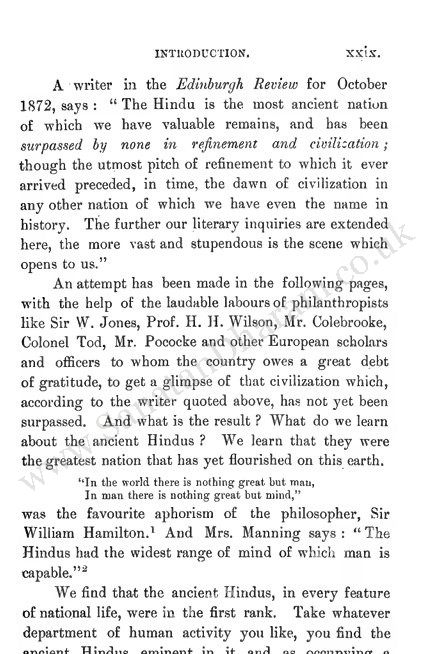
A writer in the Edinburgh Review for October 1872, says:
"The Hindu is the most ancient nation of which we have
valuable remains, and has been surpassed by none in refinement and civilization; though the utmost pitch of refinement
to which it ever arrived preceded, in time, the dawn of civilization in any other nation of which we have even the name
in history. The further our literary inquiries are extended here, the more vast and stupendous is the scene which opens
to us."
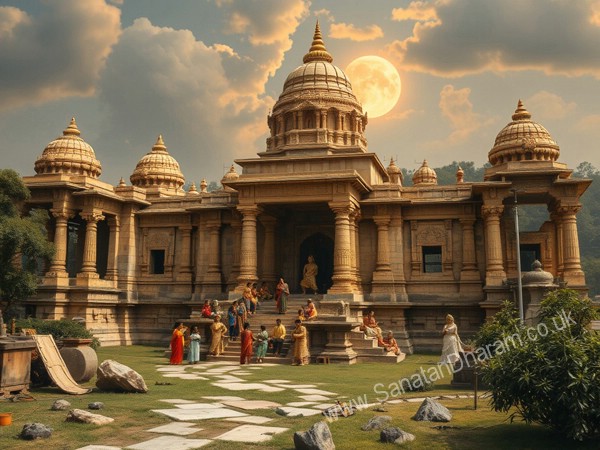
An attempt has been made in the following pages, with the help of the laudable labours of philanthropists like
Sir W. Jones, Prof. H. IT. Wilson, Mr. Colebrooke, Colonel Tod, Mr. Pococke and other European scholars and officers to
whom the country owes a great debt of gratitude, to get a glimpse of that civilization which, according to the writer
quoted above, has not yet been surpassed. And what is the result ?
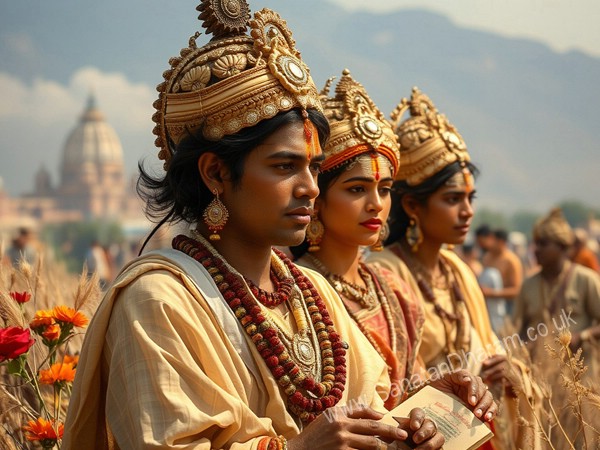
What do we learn about the ancient Hindus ? We learn
that they were the greatest nation that has yet flourished on this earth.
''In the world there is nothing great but mind,
In man there is nothing great but mind,"
was the favorite aphorism of the philosopher, Sir William Hamilton.
And Mrs. Manning says:
"The Hindus had the widest range of mind of which man is capable."
We find that the ancient Hindus, in every feature of national life, were in the first rank.
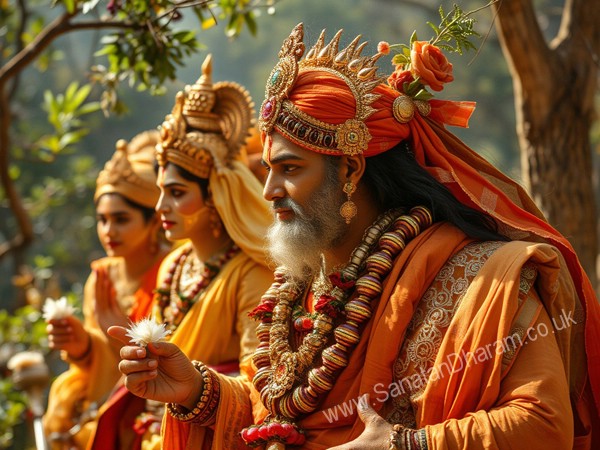
Take whatever department of human activity you like, you find
the ancient Hindus eminent in it, and as foremost place.
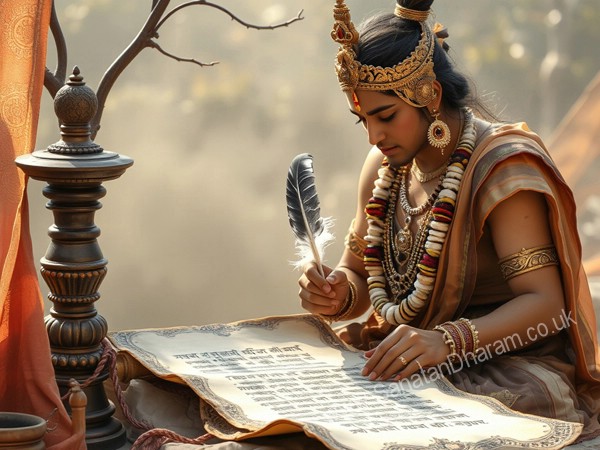
This is more than what can be said of any other nation. You may find a nation great in arras or commerce;
you may find a people eminent in philosophy, in poetry, in science or in arts ; you may find a race great politically
but not equally so morally and intellectually.
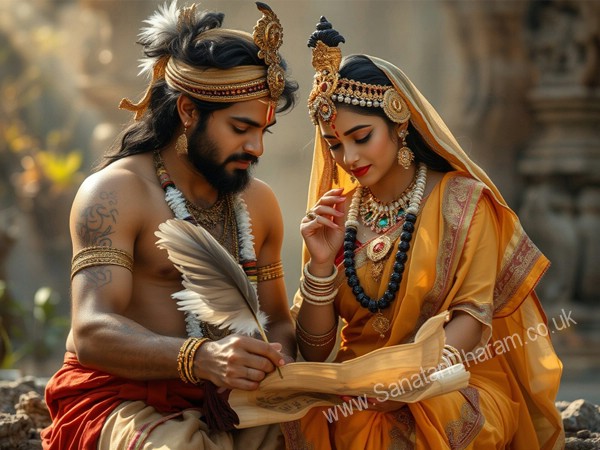
But you do not find a race which was or is pre-eminent in so many
departments of human activity as the ancient Hindus.
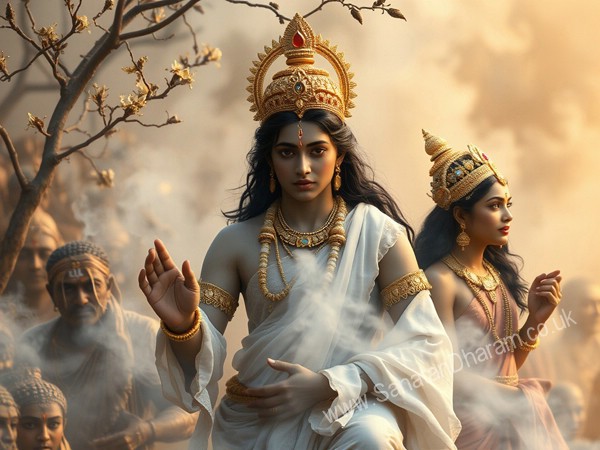
The ancient Hindus were "a poetical people," they were essentially
"a musical race," and they were "a commercial people."
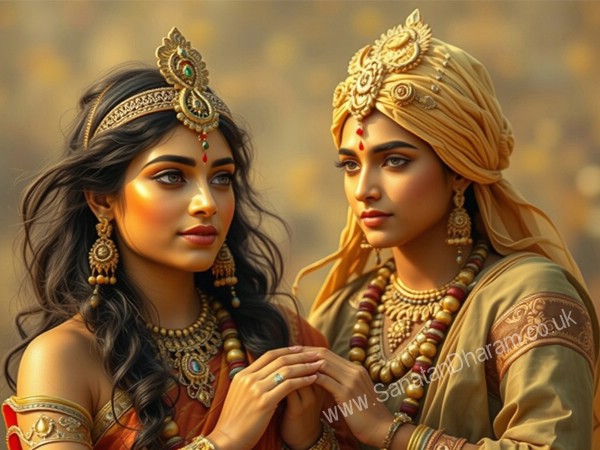
They were "a nation of philosophers;"
"in science they were as acute and diligent as ever."
"Art seems to have exhausted itself in India."
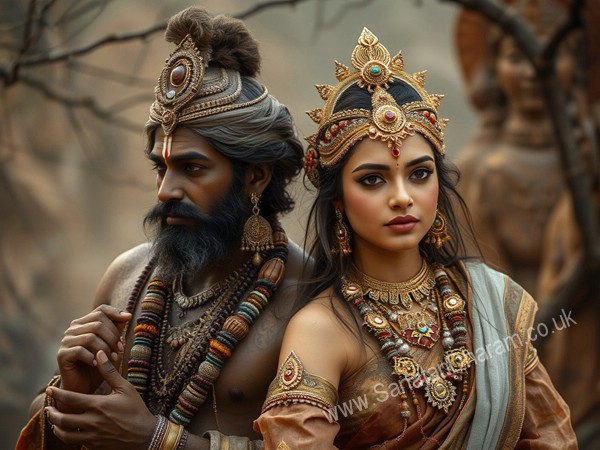
" The Hindu is the parent of the literature
and the theology of the world."
His language is the best and the most beautiful in the world.
The national character of
the ancient Hindus as regards truthfulness, chivalry and honour was unrivalled ;
their colonies filled the
world, their
kings
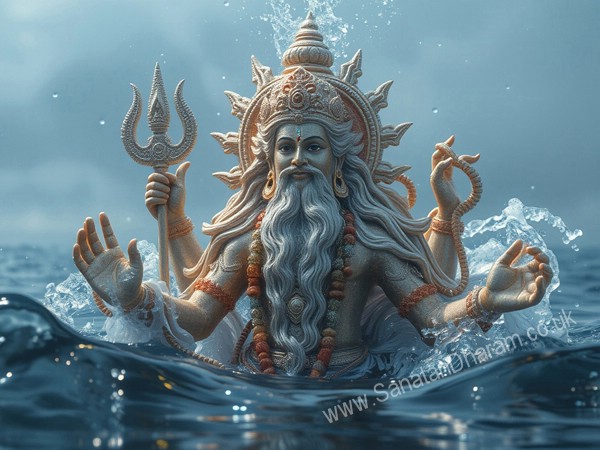
"are still worshipped as the gods of the sea,"

"their civilization still pervades in every corner of the civilized
world and is around and about us every day of our lives."
It may be urged that in the picture of Hindu civilization painted in the book, only roseate hues have been used, that
while lights are purposely made prominent the shadows are conspicuous by their absence, and that most has been made of
the best points of Hinduism.
Such critics will do well to remember that the mountains are measured by their highest
peaks and not by the low heights to which they here and there sink ; that the first rank among the mountains is assigned
to the Himalayas by Mounts Everest, Dhavalgiri and Kanchanjanga, and not by the lower heights o£ Mussoorie and
Darjeeling, and that the patches of level ground here and there found enclosed within this gigantic range are justly ignored.
It may also be remarked here that the object of this book being to enable men to appreciate the excellencies of
Hindu civilization — by giving them an idea of the character and achievements of the ancient Hindus, who were the
creatures of that civilization, which has admittedly seen its best days — any discussion of modern India for its own
sake is without the scope of this book.

Wherever, therefore, any fact relating to the society, religion, literature or
character of the Hindus of the present day, or their capacities and capabilities is
mentioned it has reference only to
the elucidation of some feature of that civilization as illustrated in the life, work or character of the people of
ancient India.
It is the inherent truth of Hinduism, the vitality and greatness of the Hindu civilization that have
enabled the Hindus yet to preserve their existence as such, despite all the political cataclysms, social upheavals,
and racial eruptions the world has seen since the Mahabharata.
These calamities overwhelmed the ancient Egyptians
and the Phoenicians and destroyed the empires of ancient Greece, Persia and Rome.
Compared to the sun of Hindu
civilization giving a constant and steady stream of beneficent light, which penetrates the farthest nooks and corners of
the world, carrying comfort and contentment to mankind, these civilizations were like brilliant meteors that appear in
the skies lighting the while, with their short lived lustre, the heavens above and the earth below.

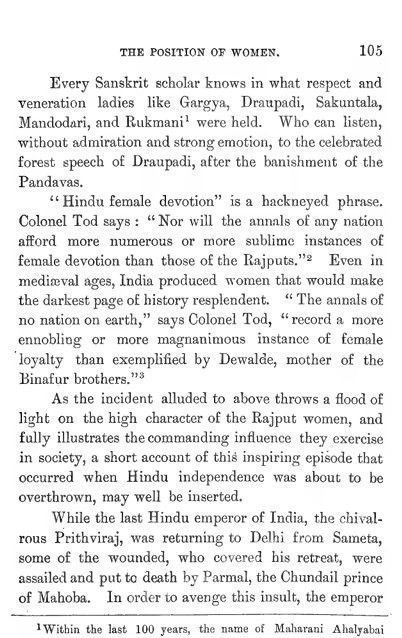
Every Sanskrit scholar knows in what respect and veneration ladies like Gargya,
Draupadi, Sakuntala, Mandodari, and Rukmani were held.
Who can listen, without admiration and strong emotion, to the celebrated forest speech of
Draupadi, after the banishment of the Pandavas.
"Hindu female devotion" is a hackneyed
phrase.
Colonel Tod says:
"Nor will the annals of any nation afford more
numerous or more sublime instances of female devotion than those of the
Rajputs."
"Even in mediaeval ages, India produced women that would make the
darkest page of history resplendent."
"The annals of no nation on earth," says
Colonel Tod, "record a more ennobling or more magnanimous instance of female
loyalty than exemplified by Dewalde, mother of the Binafur brothers."
____________________________________________________________________________________________________________
Quotes & extracts for this article can be found here.
- Book source:
"Hindu Superiority (Classic Reprint): An Attempt to Determine the Position of the Hindu Race in the Scale of Nations" (reprint) – 24 Aug. 2018
by Har Bilas Sarda (Author)
Originally published: 1867
Print length : 490 pages
ISBN-10 : 1397748796
ISBN-13 : 978-1397748799
Available on: Amazon
Available online: Archive.org
Similar Topics
Hindu Superiority - Part One || Hindu Superiority - Part Two || Hindu Superiority - Part Three ||Share Your Thoughts Below
No comments found.







Register
Login
Create your account so your comments can be posted without confirmation.